
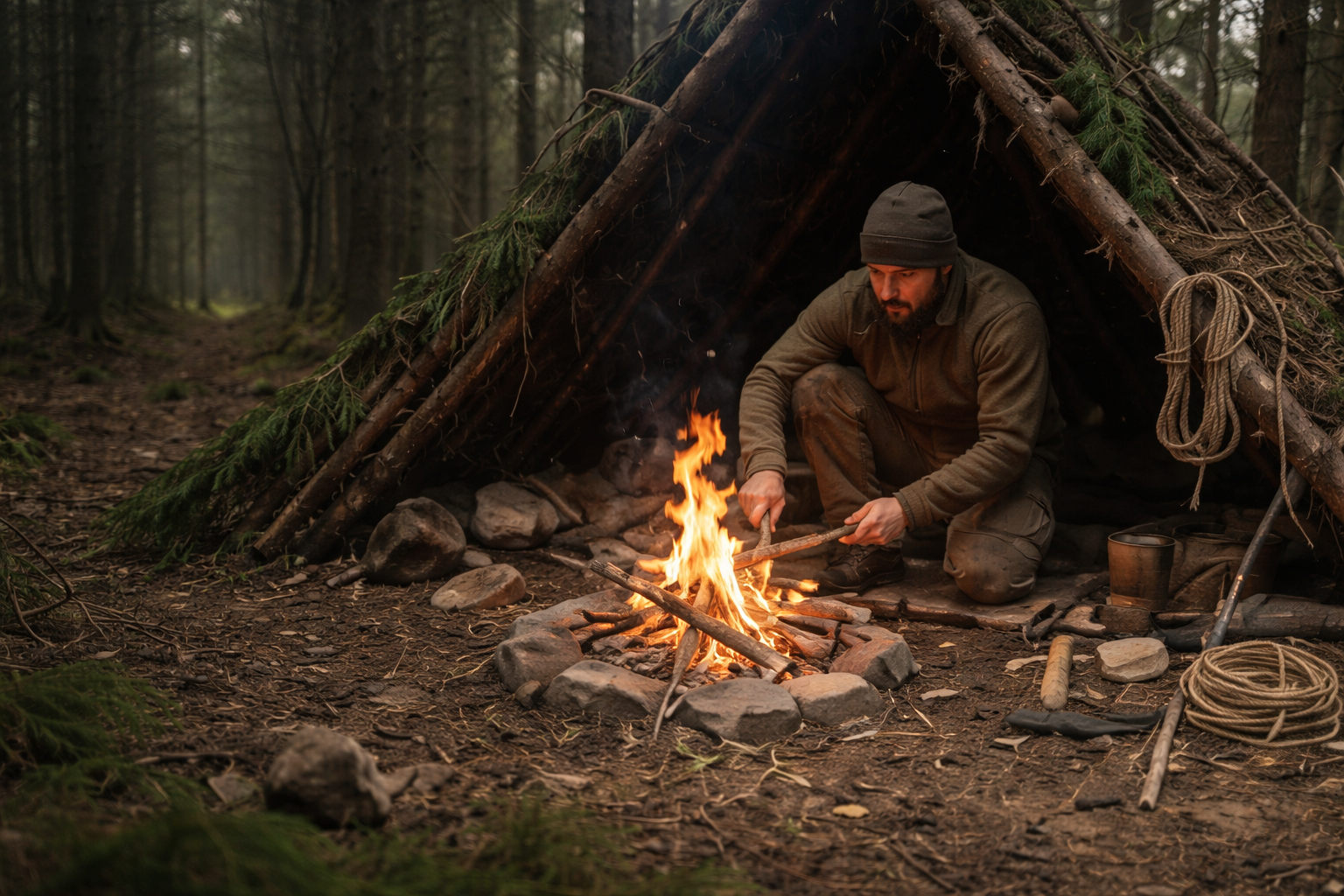
The Survival Masterclass: Thrive When the Plan Fails
From friction fire to primitive trapping, master the skills of self-reliance. Download the "Stay Rugged Survival Field Guide" and join the crew.
Your Survival Field Guide
Your Mastery Roadmap: 10 Modules to Confidence
Module 1: The Survival Mindset & Foundations
Module 2: Shelter – Natural & Improvised Defense
Module 3: Advanced Tarpology & Modern Shelter Solutions
Module 4: Firecraft: Mastering Friction Fire
Module 5: Firecraft – Ignition & Fire Management
Module 6: Water: Purification Without a Filter
Module 7: Water: Collection & Storage
Module 8: Food: Primitive Trapping & Fishing
Module 9: Food – Edible Plants & Foraging
Module 10: Navigation & Signaling for Rescue
Final Exam: The Survivalist's Challenge
Start Your Journey Today.
-
The four priorities are Shelter, Water, Fire, and Food—in that order. In harsh weather, you can die from hypothermia in 3 hours, but you can last 3 days without water and 3 weeks without food. Always build a shelter before looking for food.
-
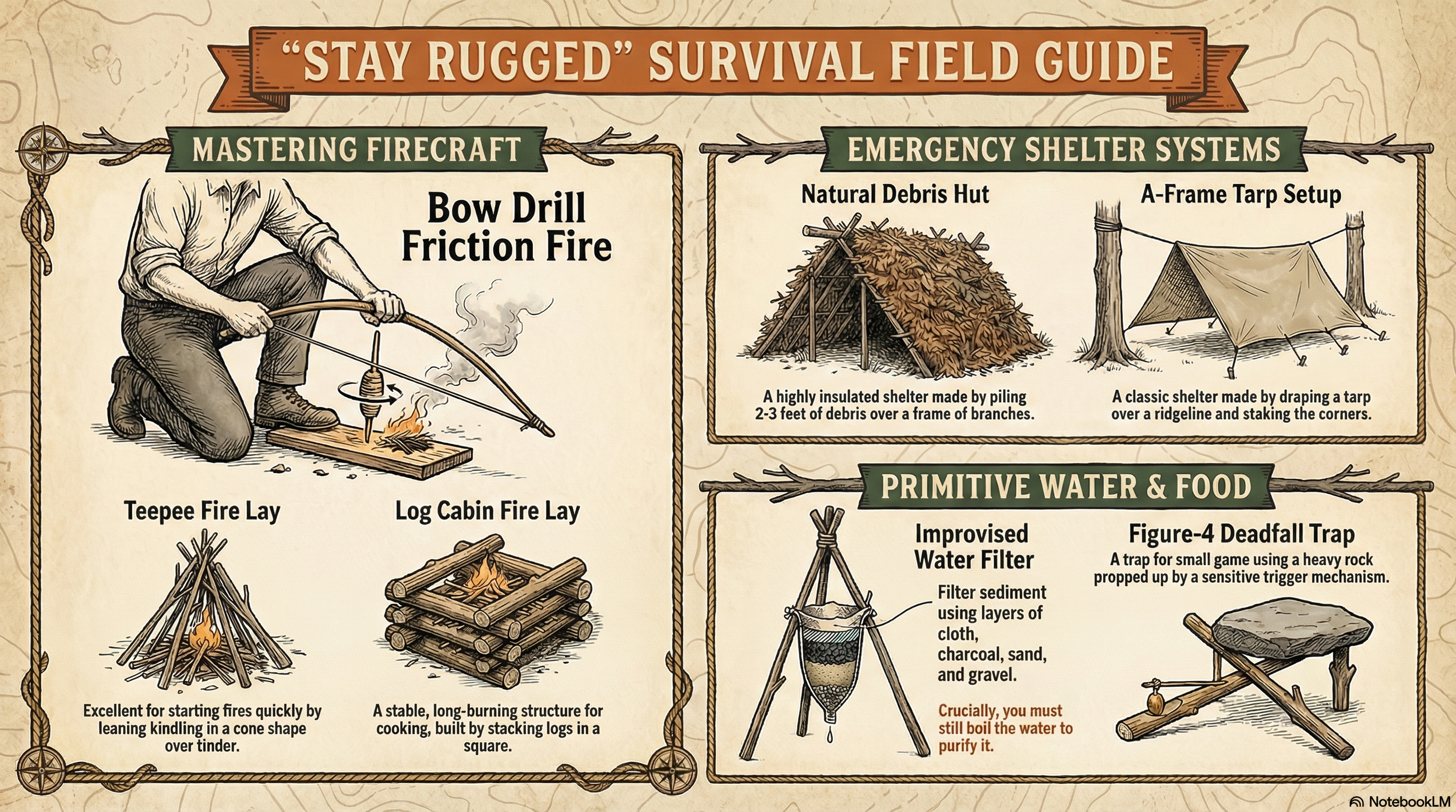
The Debris Hut (or Lean-To) is the most effective shelter for beginners. It uses a ridgepole and branches for structure, covered by a thick pile of leaves/debris for insulation. It works like a natural sleeping bag to trap your body heat, even without a fire.
-
The first step is to STOP: Sit, Think, Observe, and Plan. Panic is the number one killer. Stopping movement conserves energy and prevents you from walking further in the wrong direction while you assess your resources.
-
Use a ferro rod (spark thrower) or the friction method (bow drill). A ferro rod is reliable because it works when wet and at any altitude. Scrape sparks onto dry tinder (like cotton balls, birch bark, or dry grass) to nurture a flame.
© 2026 OUTDOOR WILDERNESS SKILLS. EST. 2026. STAY RUGGED.