
The Hunter's Masterclass: Master the Art of the Ethical Predator
Build a complete system for the field, from digital reconnaissance to shot placement. Download the "Scent & Shot Field Guide" and join the crew.
Your Hunting Guide
Your Mastery Roadmap: 12 Modules to Confidence
Module 1: The Ethical Predator & Foundations
Module 2: Digital Reconnaissance - The Map Room
Module 3: Boots-on-the-Ground Scouting
Module 4: Reading the Language of the Wild (Sign)
Module 5: Tree Stand & Elevated Hunting Safety
Module 6: The River Hunt - Silent Access & Strategy
Module 7: The Scent War - Deception & Concealment
Module 8: Shot Placement & Ballistics
Module 9: The Sacred 30 - Post-Shot Protocol
Module 10: Field Dressing & Initial Meat Care
Module 11: Advanced Strategies & Adaptations
Module 12: Gear & Loadouts for the Hunter
Start Your Journey Today
-
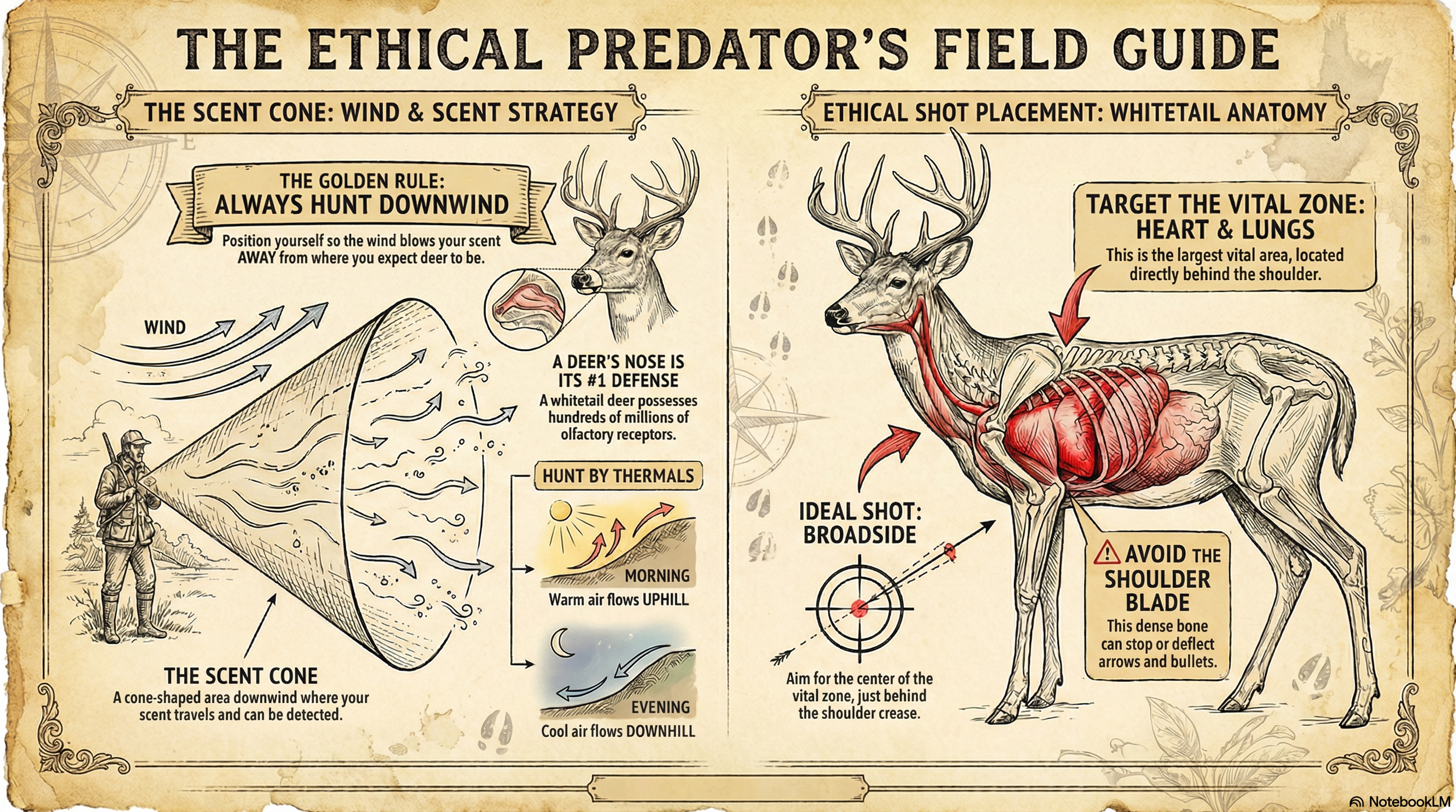
The most critical tips are scent control, playing the wind, and stillness. Always hunt with the wind in your face so your scent blows away from the deer. Move slower than you think is necessary, and avoid "sky-lining" yourself by walking on top of ridges where your silhouette is visible.
-
Aim for the vitals triangle just behind the front shoulder. This area contains the heart and lungs. A shot here provides the quickest, most ethical kill and a massive blood trail. Avoid aiming for the head or neck, as these targets are too small and often result in non-lethal wounding.
-
Start by taking a Hunter Safety Course (mandatory in most states) and finding a mentor. You do not need expensive gear to start; focus on a reliable weapon, good boots, and learning to sit still. Public land maps (like OnX) can help you find legal hunting ground near you without owning land.
-
Arrive at your stand at least 45–60 minutes before sunrise. This gives the woods time to "settle" after your noise of walking in. If hunting the evening, get set up 3–4 hours before sunset to catch deer moving from bedding areas to food sources.
© 2026 OUTDOOR WILDERNESS SKILLS. EST. 2026. STAY RUGGED.