
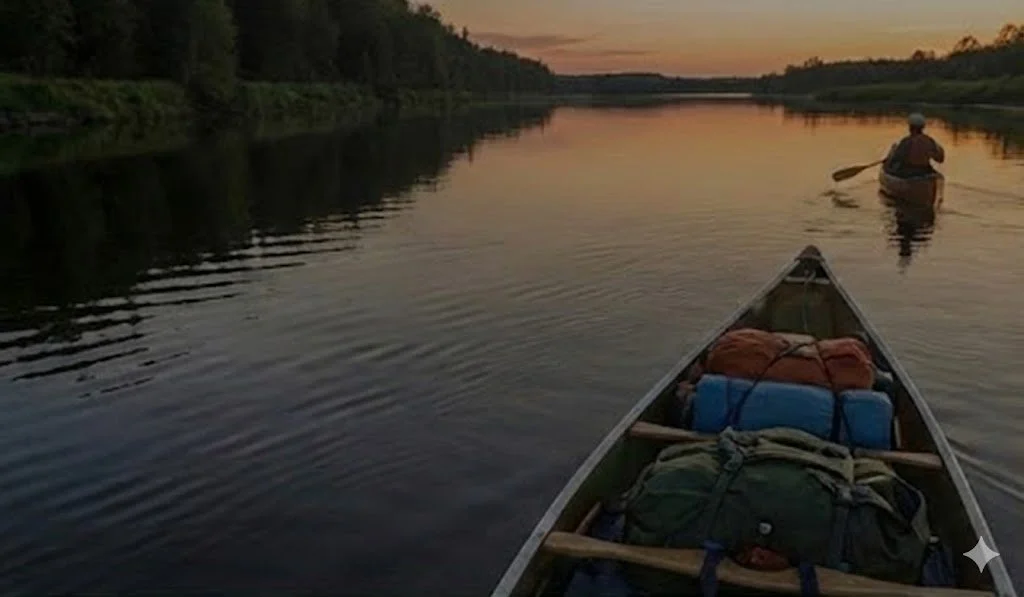
The Canoe Camping Playbook: Most guys load the canoe and figure it out on the water. This is for the ones who want the system before they push off.
From packing to paddling, get the systems you need for confident backcountry travel. Download the "A-B-C Packing Guide" and download it free.
Your A-B-C Canoe Packing Guide
Your Mastery Roadmap: 12 Modules to Confidence
Module 1: The Expedition Mindset
Module 2: The Expedition Gear Locker
Module 3: The A-B-C Packing System
Module 4: No Cooler Meal: Food for the Long Haul
Module 5: Reading the River Navigation
Module 6: Campcraft for the Expedition
Module 7: Field Repairs & Maintenance
Module 8: Wilderness First Aid & Emergency Response
Module 9: Reading Weather & Wildlife
Module 10: Expedition & Route Planning
Module 11: Leadership, Teamwork on Expedition
Module 12: Expedition Planner (Final Review)
Grab the guide. It's free.
-
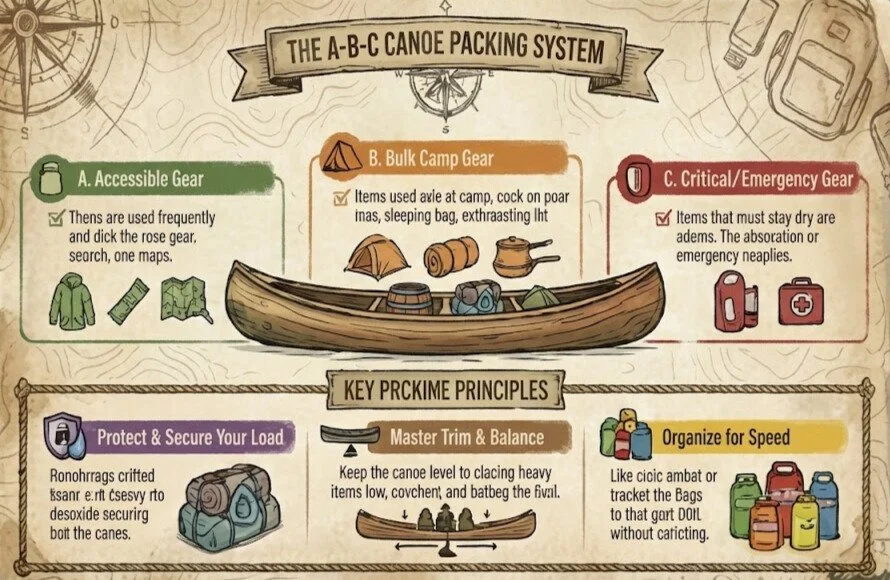
Pack your canoe with stability and access in mind. Place heavy gear (food barrels, water) low and centered to keep the boat stable. Keep emergency gear (rain gear, first aid, map) in a separate "day bag" within arm's reach. Secure everything to the boat using carabiners or ropes in case of a capsize.
-
Beyond standard camping gear (tent, sleeping bag), you need:
PFD (Life Jacket): Worn, not just carried.
Dry Bags: For clothing and sleeping gear.
Paddle + Spare: Always carry an extra paddle.
Bailing Bucket/Sponge: To remove water.
Portage Pack: A pack designed to fit inside a canoe hull.
-
Most 16-17 foot tripping canoes can safely carry 800–1,000 lbs (including paddlers). However, for performance and safety, try to keep the total load under 70% of the maximum capacity. Overloaded canoes are sluggish and dangerous in waves.
-
Use barrels for food and backpacks (dry bags) for gear. Blue barrels (60L) are crush-proof, waterproof, and trap odors, making them ideal for food storage and bear safety. Waterproof backpacks are more comfortable for portaging clothes and tents.