Most camp meals are an afterthought. Out here, how you eat determines how far you go.
Master multi-day meal planning, no-cooler cooking, and camp hygiene.
Self-Sufficient Camp Cooking
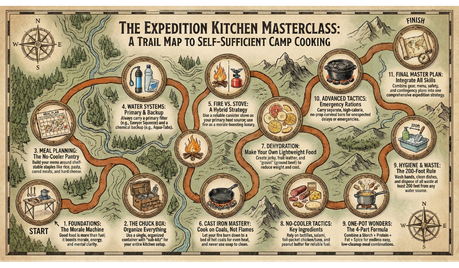
Your Mastery Roadmap: 12 Modules to Confidence
Module 1: Foundations of the Expedition Kitchen
Module 2: Building the Chuck Box & Gear Organizing
Module 3: Multi-Day Meal Planning & Nutrition
Module 4: Water: The Lifeline of Camp
Module 5: Fire vs. Stove: The Heating Element
Module 6: Mastering Cast Iron Cookery
Module e 7: The Art of Food Dehydration
Module 8: "No-Cooler" Cooking & Preservation
Module 9: One-Pot Wonders & Camp Culinary Creativity
Module 10: Camp Hygiene & Waste Management
Module 11: Advanced Kitchen Tactics
Module 12: Final Expedition Kitchen Master Plan & Menu Design
Grab the Guide. It's Free.
-
Follow the "Triangle of Safety" rule (or "Bear-muda Triangle"). Set up your cooking area, sleeping area, and food storage area at least 100 yards (300 feet) apart from each other in a triangle shape. This ensures that if a bear is attracted to food smells, it is not led directly to your tent where you sleep.
-
Use the Three-Bucket System to sanitize dishes without polluting water sources.
Wash Pot: Warm water with biodegradable soap.
Rinse Pot: Clean, hot water to remove soap.
Sanitize Pot: Cool water with a few drops of bleach or sanitizing tablets.
Disposal: Strain out food scraps (pack them out) and "broadcast" the greywater 200 feet away from any lake or stream.
-
Liquid fuel (White Gas) is the standard for expeditions and cold weather. Unlike canister gas (isobutane), liquid fuel does not lose pressure in freezing temperatures and is more economical for long trips. However, for short summer trips, canister stoves are lighter and easier to use.
-
Build a "Chuck Box" (or grab-and-go bin) that holds all your cooking essentials permanently. This box should contain your stove, fuel, spices, utensils, and cleanup kit. Keeping this kit pre-packed prevents the common mistake of forgetting small but critical items like a lighter, can opener, or salt.