This is a full lesson pulled straight from the membership, and it works for any camp you set, on a mountain, in the woods, or on a sandbar. Read it start to finish, then scroll down to see how the community turns a lesson like this into a skill you actually own.
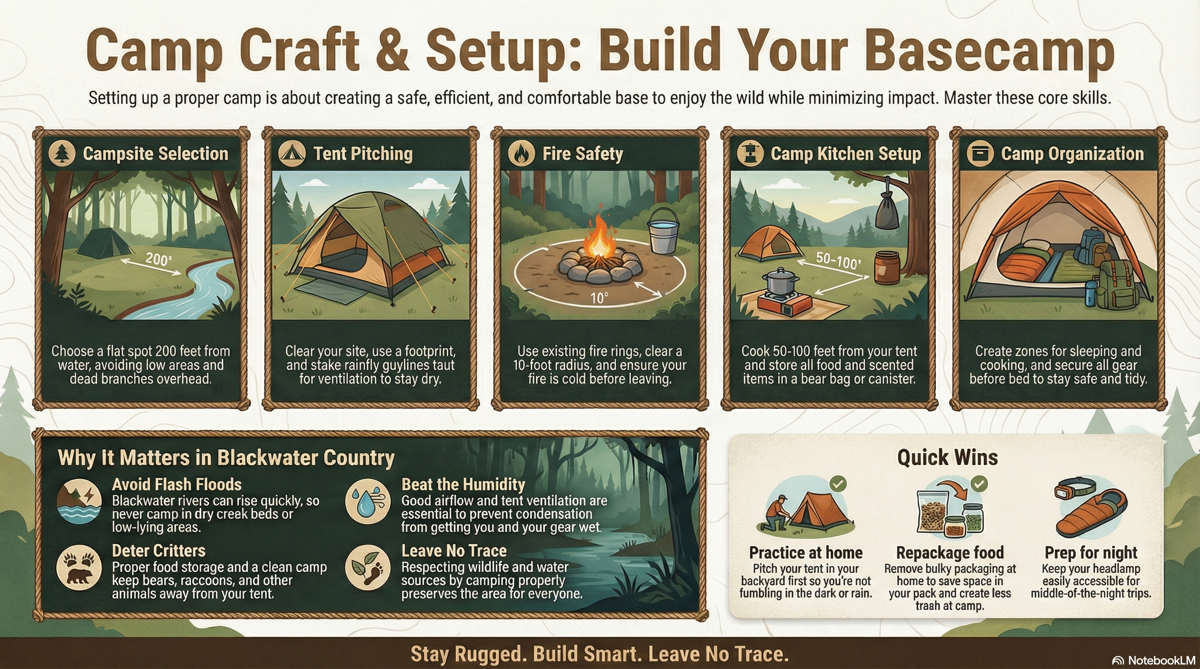
You have made it to your spot. Now it is time to build your temporary home in the wild. Setting up camp is not just pitching a tent. It is about creating a place where you can rest, reset, and stay safe. This lesson walks through campsite selection, shelter setup, fire safety, the camp kitchen, and staying organized. Staying rugged means respecting the land and building camp with intention.
Lesson 7.1: Pick the right site, flat, safe, and legal
Legal
Have the right permits. Use designated sites unless primitive camping is allowed. Camp about 200 feet (70 paces) back from water to protect the ecosystem. Stay off the trail for privacy.
Safety
Watch for widowmakers, the dead limbs hanging overhead. Avoid low areas, dry creek beds, and flood zones. Stay clear of game trails and fresh animal sign.
Comfort
Pick flat ground for better sleep. Choose spots with good drainage. Look for natural wind protection without trapping humidity, and think about sun and shade for the season.
Lesson 7.2: Pitch the tent right
Prep first: clear rocks, sticks, and pinecones, and lay a footprint to protect the tent floor. Then lay out the tent and orient the doors, assemble poles gently, and seat them into the clips or sleeves and grommets. Attach the rainfly and keep it taut. Stake all corners at a 45 degree angle for strength, and pull out the guylines for stability and airflow. Crack a vent or zipper to cut condensation, and know how to pitch your tent before the weather tests you.
Lesson 7.3: Fire safety, where fires are allowed
Regulations first: never build a fire where they are banned or restricted. Use an existing fire ring when you can, clear a 10 foot radius down to mineral soil, and avoid low branches overhead. Keep water, sand, or a shovel ready. Build it small and controlled, use dead and downed wood only, and go tinder, then kindling, then fuel. Never leave a fire unattended.
To put it dead out, remember drown, stir, feel: drown it with water, stir the ashes thoroughly, feel for heat, and repeat until it is cold to the touch. Then scatter the cold ashes.
Lesson 7.4: A simple camp kitchen
Set your kitchen 50 to 100 feet from your tent, on flat ground with some wind protection. A basic kit is a backpacking stove and fuel, a pot or metal mug, a spork, and a lighter or waterproof matches. Repackage and pre measure food at home to keep it simple. Clean up by scraping food into the trash, washing with minimal water, and dumping dishwater 200 feet from any water source. Store all scented items in a bear bag or canister, and never keep food in your tent.
Lesson 7.5: Keep camp clean and organized
Set up zones so nothing gets lost or dangerous: a sleeping zone (tent or hammock, kept food free), a cooking zone (stove, food, water filter), a hang out zone (the fire or chairs), and a bathroom zone (a cathole area away from water). Put gear back where it belongs, use stuff sacks or dry bags, and seal trash tightly. At night, secure all food and scented items, stow loose gear, and keep your headlamp handy. In the morning, pack methodically and do a full Leave No Trace sweep. Leave camp cleaner than you found it.
You do not just read it. You apply it, and the crew has your back.
Every lesson ends with a Campfire assignment. That is the method: learn it here, then post in the community and get feedback from people who camp in real conditions. Here is the assignment that closes this lesson.
Post in the Camp Kitchen category and describe your one night basecamp: where you will put the tent and why, how far your cooking area sits from the tent and how you will store food overnight, and your top three fire safety precautions.
Sketch your camp before you build it.
On paper, place your tent, cooking and food prep area, food storage, water source, and cathole area. Then walk your dead out fire checklist in order: drown, stir, feel until cold. Do this a few times at home and it becomes automatic in the field.
There are 160+ more, across 16 field guides.
Hiking, survival, navigation, paddling, hunting, fishing, first response, and family trips. Plus the app, the 580 page searchable Field Manual, and a community that answers when you ask.
Join THE CAMPFIRE, free See all free lessonsNew to Skool and not sure where to start? Read How Skool Works, or browse the 16 field guides.